
Explore a Journey of Heritage and Legacy
The Equiano Way is an 80-mile trail that travels from Sheffield, South Yorkshire to Hull, East Yorkshire exploring the heritage of some key figures and places that shaped our shared legacy of faith and freedom.
80 miles | 8 days (or 75 miles | 7 days)
Upper Wincobank Chapel, Sheffield to Wilberforce House, Hull
Wincobank | Whiston | Roche Abbey | Austerfield | Epworth |
Scunthorpe | (Alkborough) | South Ferriby | Hull
Find out how you can help us develop the route HERE
Pilgrimage Stories Held in Pathways
Every path holds stories of those who have walked and talked and reflected on it. There are layers of stories on ancient pathways. Stories unfold and unveil and connect paths. Stories encompass different paths. Paths connect those who traverse them. Paths ground us. Paths connect us to the past and present and beckon us to the way ahead. When we walk on paths or sit or lie down beside them, or ponder them, we are connected to our mother earth, and reminded that all of us are also connected to all others who ever tread or trod on this one earth that is our home.
Our route is named after one man, Olaudah Equiano (Gustavas Vassa), born a prince in Nigeria, enslaved and bought and sold in the Trans-Atlantic Slave Trade, escaped his bondage, bought his own freedom, wrote his story and walked and worked around Britain and many parts of the world as a well-known campaigner for the abolition of slavery. This story lives on, it is a story of challenge and inspiration. The Equiano Way is designed to connect other remarkable stories and histories along the way. The route is a pilgrimage, a journey of significance that gives rise to reflection, not least spiritual contemplation.
Dr Rev. Inderjit Bhogal
Olaudah Equiano (c1745-1797)
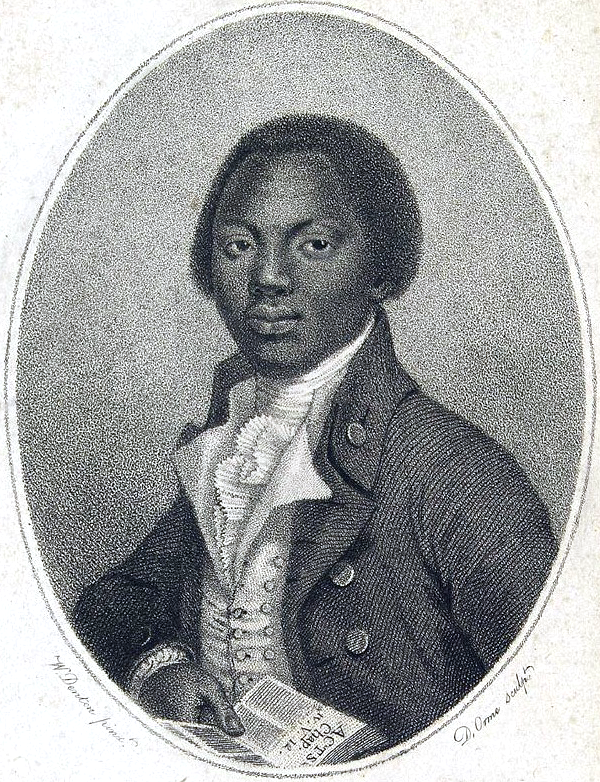
Also known as Gustavus Vassa, Equiano, was an African writer, former enslaved person, and a key figure in the British abolitionist movement. Born in what is now south-eastern Nigeria, he was kidnapped as a child, sold into the transatlantic slave trade, and endured the Middle Passage and years of servitude before buying his freedom in 1766. After settling in Britain, He was baptised into the Church of England in 1759, was influenced by Methodist evangelism and later became deeply involved in campaigning against the slave trade.
Equiano’s autobiography, ‘The Interesting Narrative of the Life of Olaudah Equiano’ (1789), drew on his experiences in slavery and freedom; its vivid first-hand account helped shape public opinion and was widely read, going through multiple editions during his lifetime and promoted by Equiano as he travelled the country. It is said that John Wesley was reading this book on his deathbed. Its influence was such that one of Wesley’s final letters, written on 24 February 1791, was to William Wilberforce, who played a central role in securing the passage of the Abolition of the Slave Trade Act in 1807 and later supported efforts that led to the abolition of slavery throughout the British Empire in 1833.
“Go on, in the name of God and in the power of His might, till even American slavery (the vilest that ever saw the sun) shall vanish away before it”. JOHN WESLEY to WILLIAM WILBERFORCE 1791
In London in the 1780s, Equiano became a leading abolitionist himself, working with key figures in the movement such as Granville Sharp and others, and co-founding the Sons of Africa, an early Black political group campaigning for an end to the slave trade. The places Olaudah visited on his book tour included Hull and he visited Sheffield, in August 1790, a visit arranged by the Rev Thomas Bryant, a local Methodist Minister. In Sheffield Olaudah had the support of radicals like James Montgomery, and was a significant influence on anti-slavery campaigners Joseph and Elizabeth Read of Wincobank Hall. The Read’s daughter, Mary Anne Rawson attended the inaugural World Anti-Slavery Convention in London (1840), and went on to form the Sheffield Ladies Association for the Universal Abolition of Slavery.
Through his writing, speaking tours, and collaborations within both abolitionist and religious reform circles, Equiano helped to bring the realities of slavery to the British public and advance the campaign that eventually led to the abolition of the British slave trade in 1807.
Discover The Equiano Way Route HERE
Funded By: